Baby Milestones by Month: Birth to 12 Months
On this page
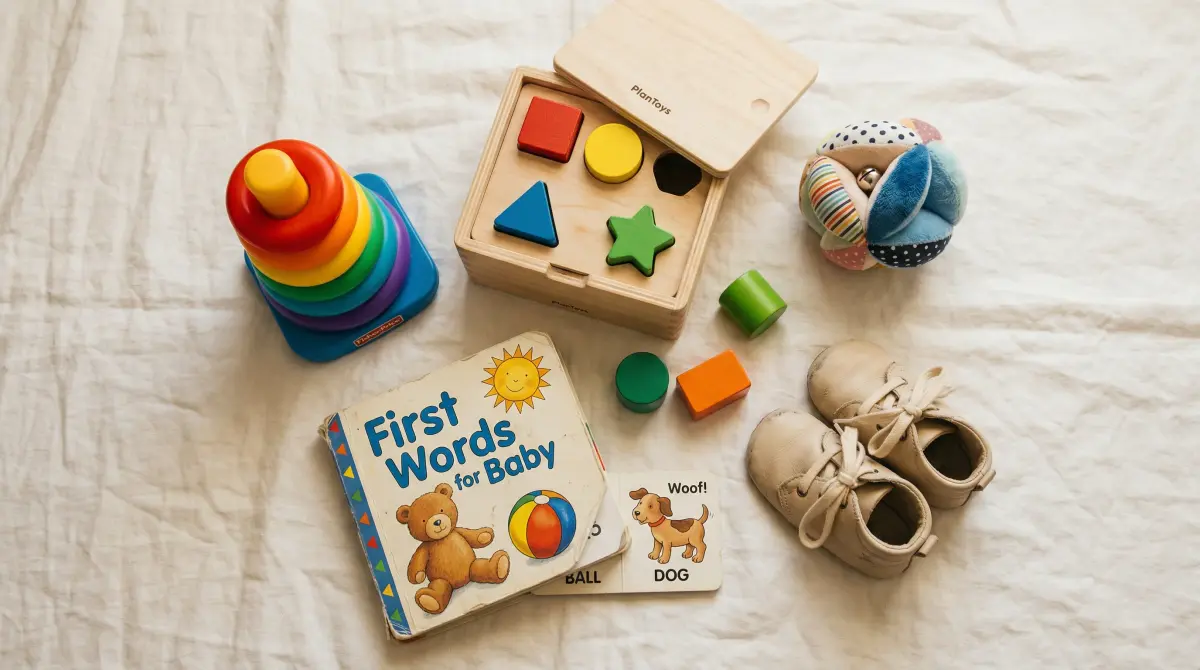
The first year of life is one of the most rapid periods of human development. Babies go from helpless newborns to walking, talking, curious little people in just 12 months. Understanding what to expect each month — and the wide range of normal — helps parents celebrate progress and identify the rare cases where extra support is needed.
What Are Developmental Milestones?
Developmental milestones are skills or behaviors that most children achieve by a certain age. They are organized into four domains: motor (gross and fine), language (receptive and expressive), social-emotional, and cognitive. Milestone charts represent ranges, not exact deadlines — every child develops at their own pace within a broad normal window.
Understanding Milestone Charts
The CDC and AAP milestone checklists show when most children (approximately 75%) can do something. A child who is a bit later than the chart isn't necessarily delayed — but missing multiple milestones or losing skills that were previously achieved warrants a pediatrician call.
Month-by-Month Milestones: 0–12 Months
| Age | Motor | Language | Social / Cognitive |
|---|---|---|---|
| 1 month | Lifts chin briefly when on tummy | Startles to loud sounds | Focuses on faces ~12 inches away |
| 2 months | Holds head up during tummy time | Cooing begins | Social smiling, follows objects with eyes |
| 3 months | Supports self on forearms during tummy time | Laughs, squeals | Recognizes parents' faces and voices |
| 4 months | Rolls front-to-back, reaches for objects | Babbles with consonants (ba, da) | Interested in surroundings, smiles spontaneously |
| 5 months | Sits with support, grasps objects | Responds to own name | Distinguishes between familiar and unfamiliar people |
| 6 months | Sits briefly alone, rolls both ways | Babbles, uses voice to express feelings | Recognizes and reacts to emotions, beginning of object permanence |
| 7 months | Bears weight on legs with support | Combines syllables (baba, dada) | Stranger anxiety may begin |
| 8 months | Sits well independently, crawling begins | Understands "no" | Object permanence developing, plays peek-a-boo |
| 9 months | Pulls to stand, pincer grasp developing | Points, waves bye-bye | Looks for hidden objects, imitates actions |
| 10 months | Cruises along furniture | Says mama/dada with meaning | Separation anxiety peaks |
| 11 months | May take first steps | 2–3 words besides mama/dada | Follows simple instructions with gesture |
| 12 months | Walks with or without support | 3–5 words, imitates speech sounds | Uses objects correctly (cup, spoon), tests cause and effect |
Red Flags by Age
Call your pediatrician if your baby:
- By 2 months: Doesn't respond to loud sounds, doesn't watch moving objects, doesn't smile at people
- By 4 months: Doesn't bring objects to mouth, doesn't push down on legs when feet are on a hard surface
- By 6 months: Doesn't laugh or squeal, doesn't try to reach for objects, doesn't roll in either direction
- By 9 months: Doesn't babble (mama, baba, dada), doesn't respond to name, doesn't recognize familiar people
- By 12 months: Doesn't gesture (point, wave), doesn't use any single words, doesn't search for hidden objects
- At any age: Loses skills they previously had
Developmental Regression
If your baby loses skills they previously had — stops babbling, stops smiling, or loses motor skills — contact your pediatrician promptly. This is always worth investigating, regardless of age.
How to Support Development
You don't need flashcards or specialty toys. The single best thing you can do for your baby's development is responsive, engaged interaction:
- Talk constantly: Narrate everything you're doing. "I'm putting on your sock. First this foot, now this foot." This builds vocabulary and language processing.
- Tummy time daily: From birth, for graduated amounts. This builds the neck, shoulder, and core strength that underlies all subsequent motor milestones.
- Read together: Even in the first weeks. Point at pictures, use different voices, let your baby touch the pages. Board books from birth are wonderful.
- Follow their lead: When your baby shows interest in something, talk about it. This teaches them that their interests matter and how conversation works.
- Limit screens before 18 months: The AAP recommends no screen time except video calls before 18 months. Language develops through live interaction, not passive viewing.
When to Talk to Your Pediatrician
Your baby's well-child visits (typically at 2, 4, 6, 9, and 12 months) include developmental screening. But you don't have to wait for a scheduled visit if you have concerns. Trust your instincts — parents are often the first to notice something is different. Early intervention services, if needed, are most effective when started early.
Remember
Most babies follow their own timeline within the broad range of normal. Celebrate every small victory — the first time they grab your finger, the first real smile, the first word. This year goes faster than any other.
Frequently Asked Questions
What if my baby is behind on milestones?
Milestone charts show averages, not strict deadlines. There is wide normal variation. However, if your baby is missing multiple milestones or has lost skills they previously had (developmental regression), consult your pediatrician. Early intervention services are most effective when started early.
Are milestone charts accurate?
Milestone charts show when most babies achieve a skill. The CDC and AAP have moved to showing when 75% of babies achieve a milestone, to reduce unnecessary anxiety while still identifying true delays. Always consider the full range, not just a single age point.
My baby skipped crawling — is that okay?
Yes. Crawling is not considered a required developmental milestone by the CDC or AAP — some babies go directly from sitting to pulling to stand to walking. What matters is that they are developing strength and coordination overall.
How do I do tummy time if my baby hates it?
Start with just 1–2 minutes at a time, multiple times per day, when your baby is awake and alert (not right after feeding). Get down on their level, make eye contact, and use a toy for motivation. Tummy time on your chest counts. Most babies come to tolerate it as they build strength.
Complete Guides by Month
Frequently Asked Questions: Baby Milestones
What milestones should a baby have at 6 months?+
At 6 months: sits with support (unsupported sitting develops 6–8 months), reaches and grabs objects with both hands, responds to own name, babbles (consonant sounds like 'ba', 'da', 'ma'), laughs, and shows interest in solid foods. See the 6-month guide.
When do babies say their first words?+
Most babies say their first intentional word (with consistent meaning) between 10–14 months. 'Mama' and 'dada' with meaning typically emerge at 10–12 months. By 12 months: 1–3 words. By 18 months: 10–20 words. By 24 months: 50+ words and 2-word phrases. See the when babies start talking guide.
What if my baby is behind on milestones?+
Milestones have a range, not a single deadline. A baby who rolls at 5 months and one who rolls at 6 months are both normal. Developmental surveillance checks happen at well-child visits. Concerns that warrant a conversation with your pediatrician: no smiling at 3 months, no babbling at 12 months, no words at 16 months, loss of previously acquired skills at any age.
How do I help my baby reach milestones?+
Daily tummy time builds the motor skills for rolling, sitting, and crawling. Talking and singing builds language. Face-to-face interaction builds social skills. Reading aloud builds vocabulary. There is no evidence that milestone 'training' accelerates development — babies need stimulation, not drilling.
Track every milestone — free
Month-by-month milestones, development tips, and 100+ expert insights. Science-backed, always free.
Get Started Free →No credit card · No ads · Always free