Starting Solid Foods: The Complete Evidence-Based Guide (2024 AAP Guidelines)
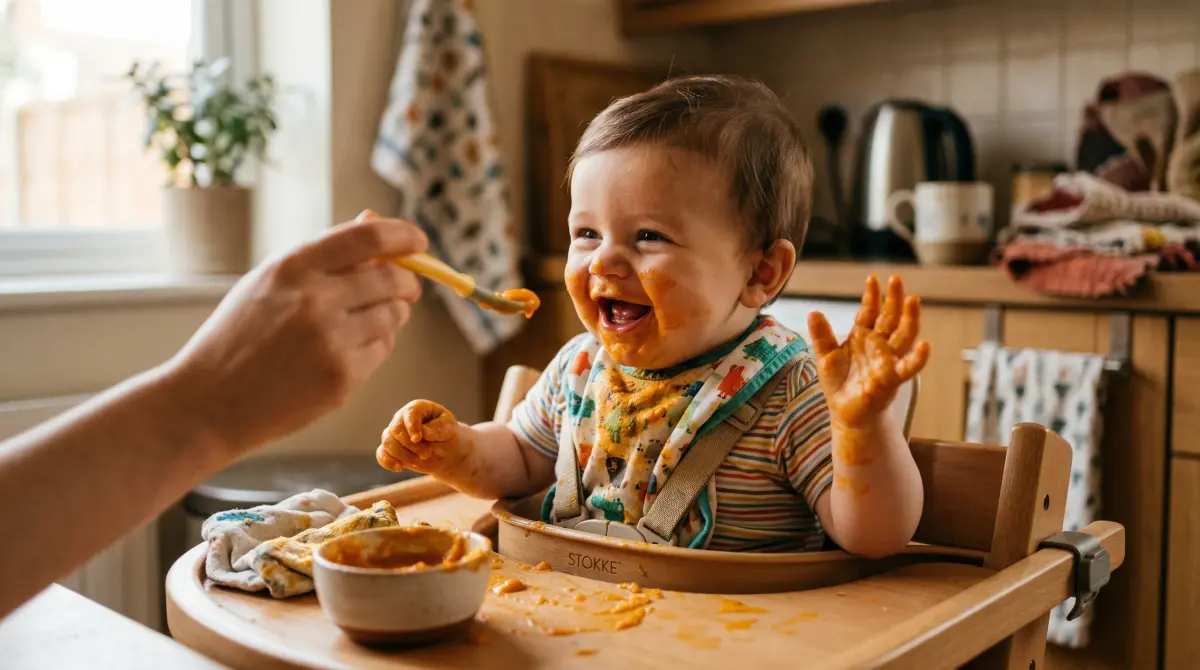
Starting solid foods is one of the most exciting milestones in your baby's first year — and also one of the most confusing, given the amount of conflicting advice available. This guide cuts through the noise with evidence-based guidance from the 2024 AAP guidelines, the landmark LEAP trial, and recommendations from WHO and ESPGHAN. Taste preferences may begin before birth — at 21 weeks pregnant, research suggests babies swallow amniotic fluid flavoured by the mother's diet, which may influence early food acceptance. Gut maturity at birth depends partly on gestational age — babies born at 26 weeks require additional time before solid food introduction regardless of other readiness signs.

Solid food introduction timeline from 6 to 12 months. Milk feeds remain primary nutrition until 12 months.
Signs of Readiness for Solid Foods
Age is just one factor. The AAP recommends watching for these three readiness signs, all of which should be present before starting:
- Sitting with minimal support and holding their head steady and upright
- Loss of the tongue-thrust reflex — when you place a spoon near their mouth, they don't automatically push it out
- Showing interest in food — watching others eat, reaching for food, opening mouth when food approaches
Most babies reach these milestones around 6 months, though the range is approximately 4–7 months. The AAP recommends around 6 months as the right time to start, aligning with WHO guidelines. Starting before 4 months is not recommended under any circumstances.
⚠️ Don't Start Too Early
Starting solids before 4 months is associated with increased risk of obesity, food allergies, and digestive problems. The baby's gut is not developmentally ready. Breast milk or formula provides complete nutrition for the first 6 months.
Why Around 6 Months — Not 4?
While some older guidelines (and many grandparents) recommended starting at 4 months, the 2024 AAP guidelines reinforce around 6 months. Here's the evidence:
- At 6 months, babies' kidneys and digestive systems are better equipped to handle solid foods
- Exclusive breastfeeding to 6 months maximizes the immune and developmental benefits of breast milk
- The gut microbiome is better developed by 6 months, supporting the introduction of allergenic foods
- Earlier introduction of solids has not been shown to improve sleep (a common myth) and can reduce milk intake, compromising nutrition
The key exception: babies showing all three readiness signs before 6 months may be ready at 5–5.5 months. Always discuss the timing with your pediatrician.
Iron-Rich First Foods
By 6 months, breastfed babies begin to outgrow the iron stores they were born with, making iron-rich foods a priority. Iron is critical for brain development; iron deficiency in infancy is associated with long-term cognitive and behavioral consequences. Prioritize these iron-rich first foods:
- Iron-fortified infant rice or oat cereal (traditional first food for this reason)
- Pureed or mashed meat: chicken, beef, lamb, pork
- Mashed legumes: lentils, black beans, kidney beans
- Dark leafy greens: spinach, kale (pureed)
- Tofu (soft, mashed)
Pairing iron-rich foods with vitamin C (e.g., pureed bell pepper, mango, or strawberry) significantly improves non-heme iron absorption.
Early Allergen Introduction: The LEAP Trial Evidence
Perhaps the biggest paradigm shift in infant feeding over the past decade is the recommendation to introduce allergenic foods early and regularly. The landmark LEAP (Learning Early About Peanut Allergy) trial, published in the New England Journal of Medicine in 2015, demonstrated that introducing peanut protein to high-risk infants (those with severe eczema or egg allergy) between 4–11 months reduced peanut allergy by 81% compared to avoidance.
Subsequent studies extended this finding to other major allergens. The current evidence-based recommendation: introduce the top 9 allergens early (around 6 months, or as early as 4–6 months under medical guidance for high-risk infants) and continue offering them regularly.
The top 9 allergens to introduce:
- Peanuts (thin peanut butter mixed into puree, or peanut puff snacks)
- Tree nuts (cashew, almond, walnut butter thinned into food)
- Eggs (well-cooked scrambled egg or egg in baked goods)
- Cow's milk (in cooked foods, yogurt, cheese — not as a drink before 12 months)
- Wheat (well-cooked pasta, bread, crackers)
- Soy (tofu, soy-based foods)
- Fish (well-cooked, no bones — salmon, cod)
- Shellfish (well-cooked shrimp, crab)
- Sesame (tahini thinned into food)
💡 Introducing Allergens Safely
Introduce one new allergenic food at a time. Wait 2–3 days before introducing the next new allergen (not because of allergy risk, but so you can identify the cause if a reaction occurs). Introduce allergens at home during the day, not before bed or daycare. If your baby has severe eczema or an existing food allergy, consult your pediatrician before introducing allergens — they may refer you to an allergist.
BLW vs. Purees vs. Combination Approach
Traditional Purees
Spoon-fed smooth purees have been the traditional approach to starting solids. They are well-studied, allow precise control of texture and quantity, and are particularly useful for monitoring intake in babies who need careful nutritional management. The main drawback is that they require more preparation time and don't naturally expose babies to a variety of textures.
Baby-Led Weaning (BLW)
BLW involves offering soft, finger-sized pieces of appropriate food from the start and letting the baby self-feed. The theoretical benefits include: better appetite regulation, increased acceptance of varied textures, and developmental skill-building. The main concerns are: adequate iron intake and choking risk. A systematic review found no significant difference in growth outcomes between BLW and traditional feeding. The key is ensuring BLW foods are appropriately soft (squishable between finger and thumb) and iron-rich.
Combination Approach (BLISS)
Most feeding specialists now recommend a combination approach: offer both spoon-fed foods and soft self-fed finger foods from the start. This gives the benefits of both approaches. You can offer iron-fortified puree by spoon while also offering soft broccoli florets or banana for self-feeding.
Foods to Avoid Under 12 Months
| Week | Foods to Introduce | Texture | Portion Size |
|---|---|---|---|
| Week 1 | Iron-fortified oat/rice cereal | Very thin puree | 1–2 teaspoons |
| Week 2 | Pureed sweet potato, butternut squash | Smooth puree | 1–2 tablespoons |
| Week 3 | Pureed peas, green beans; soft carrot | Smooth to slightly lumpy | 2–3 tablespoons |
| Week 4 | Pureed chicken/turkey; mashed banana | Smooth; mashed | 2–3 tablespoons |
| Week 5 | Well-cooked egg yolk; pureed lentils | Mashed | 2–3 tablespoons |
| Week 6 | Thin peanut butter puree; whole egg | Thin puree mixed into food | 1 teaspoon allergen |
| Week 7 | Soft fish (salmon); pureed apple/pear | Flaked; mashed | 2–4 tablespoons |
| Week 8 | Yogurt, soft cheese, mashed avocado | Soft lumps/mashed | 2–4 tablespoons |
Foods to avoid entirely under 12 months:
- Honey: Risk of infant botulism. Clostridium botulinum spores can germinate in the infant gut and produce toxin. This applies to all forms of honey, including cooked.
- Whole cow's milk as a drink: Not nutritionally appropriate as a primary drink. Fine in cooking and baked goods from 6 months.
- Salt: Babies' kidneys cannot process salt well. Don't add salt to baby food; avoid salty processed foods.
- Sugar and sweetened foods: Establishes a preference for sweet foods; no nutritional benefit.
- Round hard foods: Grapes, cherry tomatoes, blueberries (whole), nuts (whole) — all are choking hazards. Always cut/quarter or flatten.
- Hard raw vegetables: Raw carrot, celery, apple — too firm for early self-feeding. Cook or grate finely.
- Rice drinks: Contain high levels of inorganic arsenic. Not suitable for under-5s.
- Low-fat dairy: Babies need fat for brain development. Full-fat versions only.
Choking vs. Gagging: How to Tell the Difference
Many parents delay starting solids out of fear of choking. Understanding the difference between gagging and choking is reassuring:
Gagging is a normal, protective reflex. It looks dramatic — baby may splutter, cough, go red, and look distressed. But it is self-resolving. It is part of how babies learn to manage food in their mouth. Do not rush to intervene or stick your fingers in their mouth.
Choking is a genuine emergency. Signs include: silent — not coughing or crying, looking frightened, unable to breathe, blue lips. If you suspect choking: call for help, perform back blows and chest thrusts as appropriate for an infant, and call emergency services immediately.
Learning infant first aid and taking a hands-on course before starting solids is highly recommended.
Frequently Asked Questions
When is the right age to start solid foods?
The AAP and WHO both recommend starting solid foods at around 6 months. The key is that your baby shows all three readiness signs: sitting with support, head control, loss of tongue-thrust reflex, and interest in food. Do not start before 4 months under any circumstances. Some babies show readiness signs slightly before or after 6 months — always discuss timing with your pediatrician.
What should I offer as a first food?
Iron-rich foods are the priority, as breastfed babies' iron stores begin to deplete around 6 months. Good first foods include iron-fortified infant oat cereal, pureed meat (chicken, beef), and mashed lentils. Pair with vitamin C foods to enhance iron absorption. You can also offer pureed vegetables and fruits. There is no required order — variety from the start is beneficial.
Is baby-led weaning safe?
Yes, when done correctly. BLW involves offering appropriately soft, squishable finger foods (not hard chunks that could be a choking hazard). The food must be soft enough to squish between your finger and thumb. Ensure iron-rich foods are included. Take an infant first aid course so you're prepared to handle gagging (normal) vs. choking (rare but possible). Studies show no increased choking risk with BLW when guidelines are followed.
Do I need to give my baby water when starting solids?
Small sips of water with solid food meals are fine from 6 months — this helps with digestion and prevents constipation. Offer small amounts (2–4 oz / 60–120 ml) with meals in an open cup or sippy cup. Breast milk or formula remains the primary drink until 12 months. Do not give juice.
My baby spits out everything I offer. What should I do?
This is completely normal in the early weeks. It takes most babies 10–20 exposures to a new food before they accept it. A spit-out does not mean rejection — it is part of the learning process. Keep offering small amounts of a variety of foods with no pressure. Mealtimes should be relaxed and positive. Never force-feed or use distraction tactics like spoon-flying-as-airplane — this disrupts the baby's natural hunger and satiety signals.
References
- American Academy of Pediatrics. (2024). Starting Solid Foods. https://www.healthychildren.org/English/ages-stages/baby/feeding-nutrition/
- Du Toit, G., et al. (2015). Randomized trial of peanut consumption in infants at risk for peanut allergy (LEAP trial). New England Journal of Medicine, 372(9), 803–813. https://doi.org/10.1056/NEJMoa1414850
- World Health Organization. (2023). Complementary feeding. https://www.who.int/health-topics/complementary-feeding
- ESPGHAN Committee on Nutrition. (2017). Complementary feeding: A position paper. Journal of Pediatric Gastroenterology and Nutrition, 64(1), 119–132. https://doi.org/10.1097/MPG.0000000000001454
Your complete baby guide — free
Month-by-month milestones, sleep science, feeding roadmap, and 100+ expert tips. Science-backed, always free.
Open BabyBloom free →No account needed · No credit card