The 8-Month Sleep Regression: What It Is and How to Survive It
On this page
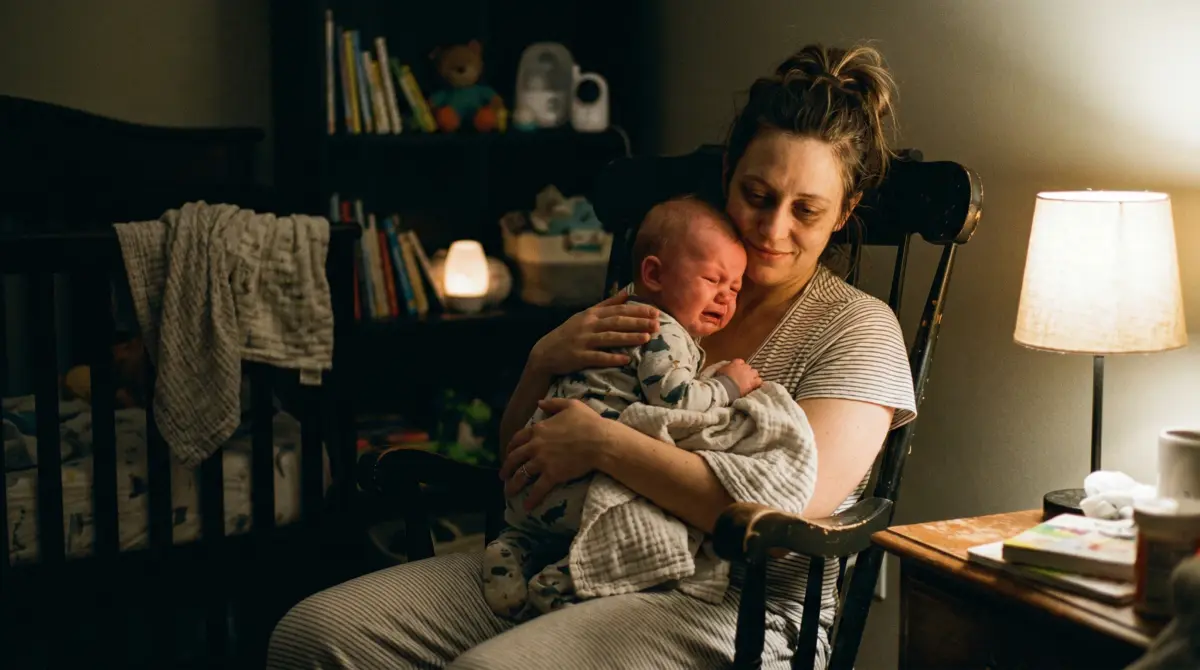
Just when many parents feel like they have turned a corner on sleep, the 8–10 month period delivers one of the most disruptive regressions of the first year. Your previously good sleeper is suddenly waking multiple times, refusing to be put down, and fighting naps they used to take willingly. What's happening, and what can you do about it? For a full breakdown of 8-month nap expectations, see our baby sleep schedule by age guide — including when the 3-to-2-nap transition is developmentally appropriate.
What Causes the 8-Month Regression
Unlike the 4-month regression — which is caused by a permanent change in sleep architecture — the 8-month regression is driven by a perfect storm of developmental milestones happening simultaneously:
Separation Anxiety
Around 7–10 months, most babies develop full object permanence — the understanding that objects (and people) continue to exist when out of sight. This is a major cognitive leap, but it comes with a complication: your baby now knows you exist somewhere out there when they wake at 2 AM, and they want you. They also experience more intense separation anxiety at nap and bedtime because they understand that you leaving is a real event with real consequences.
Motor Milestones
The 8–10 month period is one of the most motor-intensive of the first year. Crawling, pulling to stand, cruising along furniture, and first steps are all emerging. The brain prioritizes these motor programs, often processing and practicing them during sleep. This can cause increased restlessness and night waking. Many parents notice their baby "practicing" in the crib — rolling, pushing up, attempting to stand — during nighttime wakings.
Object Permanence
As object permanence develops, babies become much more aware of their surroundings at sleep transitions. They may refuse to be put down in the crib (where they can no longer see you) in a way they didn't before. This is not defiance — it is a completely normal developmental response to a genuine cognitive advance.
Why This Is Actually Good News
Separation anxiety and object permanence are signs of healthy, secure attachment and normal cognitive development. A baby who cries when you leave is a baby who loves and trusts you — this is the foundation of healthy relationships, not a problem to be eliminated.
How It Differs from the 4-Month Regression
| Feature | 4-Month Regression | 8-Month Regression |
|---|---|---|
| Cause | Permanent sleep architecture change | Developmental milestones + separation anxiety |
| Sleep architecture change? | Yes — permanent | No — existing mature cycles |
| Typical duration | 2–6 weeks | 3–6 weeks |
| Primary driver | Neurological maturation | Motor leaps + attachment development |
| Key strategy | Build new sleep associations | Maintain consistency, support attachment |
How Long Does It Last?
Most families see meaningful improvement within 3–6 weeks. The peak disruption is usually weeks 2–4. Because the underlying sleep architecture hasn't changed, babies who had solid sleep habits before the regression typically return to them more quickly once the developmental burst settles.
Strategies to Get Through It
Maintain Your Routine
Consistency is your most powerful tool during a regression. Keep bedtime and nap times as consistent as possible. Your baby's circadian rhythm is anchored to routine — disrupting it makes the regression worse and extends recovery time. A predictable bedtime sequence provides the sense of security your separation-anxious baby is seeking.
Extra Connection During the Day
Research on attachment and separation anxiety consistently shows that babies who get more connection and "fill their cup" during the day tend to have easier separations at bedtime. Babywearing, active floor play, and responsive interactions during awake time help buffer nighttime separation anxiety.
Brief Check-ins Rather Than Full Resettling
For night wakings, a brief, calm check-in (pat on the back, quiet "I'm here, time to sleep") without fully picking up or nursing may be enough to reassure your baby while preserving their ability to return to sleep. If you've been sleep training, a brief check-in approach is typically more effective than fully resuming resettling — but do what feels right for your family.
Practice Separations During the Day
Brief, positive separations during awake time help build confidence. Leave the room for 30 seconds, then return and greet your baby warmly. Gradually extend the duration. This isn't harsh — it's gentle exposure therapy that teaches your baby that you always come back.
What to Avoid
Don't make major sleep changes at the peak of the regression. Don't drop naps before your baby is ready to manage the resulting overtiredness. Don't assume all regression disruption is hunger — unnecessary night feeds can extend the regression by creating a new association.
Nap Transitions During This Period
Many babies transition from 3 naps to 2 naps somewhere between 6–8 months — often overlapping with the 8-month regression. Signs your baby is ready for 2 naps: consistently fighting the third nap, taking a long time to fall asleep for the third nap, or that third nap is causing a late bedtime.
The 2-nap schedule typically looks like: Wake window 2–2.5 hours → Nap 1 (1–1.5 hours) → Wake window 2.5–3 hours → Nap 2 (1–1.5 hours) → Wake window 3–3.5 hours → Bedtime.
Night Weaning Considerations
The 8–10 month period is when many families consider night weaning — gradually reducing or eliminating night feeds. Most healthy 8–10 month olds who are eating adequate solids can physiologically go through the night without feeding. However, many still do wake from habit or comfort.
Night weaning is a personal decision. If you choose to pursue it, gradual reduction (reducing the duration of feeds by a few minutes each night) is gentler than cold turkey. Consult your pediatrician to confirm your baby's growth and development support it.
This Too Shall Pass
The 8-month regression is one of the most disruptive but also most clearly temporary of the infant sleep regressions. The developmental burst driving it — crawling, object permanence, motor leaps — is exciting and wonderful. Within a few weeks, most babies return to their previous sleep baseline, and you'll have an even more capable, connected little person on the other side.
Frequently Asked Questions
Is the 8-month sleep regression normal?
Yes, completely normal. The 8–10 month regression affects the majority of babies and is driven by separation anxiety, major motor milestones, and the development of object permanence. It is a sign of healthy development and will pass.
How long does the 8-month regression last?
Most families see improvement within 3–6 weeks. Unlike the 4-month regression, this one does not involve a permanent change in sleep architecture — the underlying sleep patterns remain mature. Babies with solid sleep habits before the regression typically recover faster.
Should I change anything during the 8-month regression?
Focus on maintaining existing routines rather than making major changes during peak disruption. Offer extra daytime connection. If you were working on sleep independence before the regression, it's fine to pause temporarily. Once the regression passes, you can resume.
Is this a good time to drop a nap?
The 8-month regression overlaps with the 3-to-2 nap transition for many babies. If your baby is consistently fighting the third nap, it may be time to transition. But don't rush — moving to 2 naps before your baby is ready can worsen overtiredness and extend the regression.
Age-by-age sleep guidance — free
Wake windows, nap schedules, regression timelines, and month-by-month sleep science. Always free.
Get Started Free →No credit card · No ads · Always free