When Do Babies Start Sleeping Through the Night?
On this page
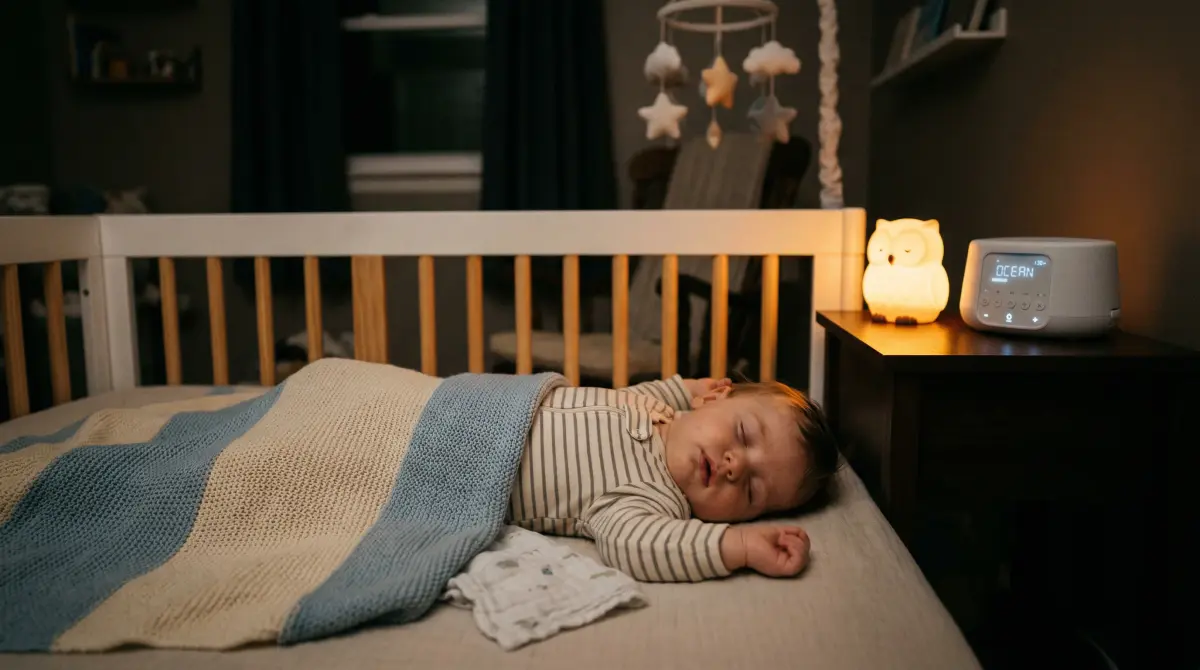
Ask ten parents when their baby started sleeping through the night and you will get ten wildly different answers — anywhere from 8 weeks to 18 months. This guide focuses on the timeline: what age to expect it, what's normal, and what developmental factors drive consolidation. If your baby used to sleep better and has regressed, or you're troubleshooting ongoing night waking, see Baby Not Sleeping Through the Night: Why It Happens → The honest, science-backed answer: it depends on how you define "sleeping through," what factors influence it, and a significant dose of individual variation. Here's what the research actually shows.
Defining "Sleeping Through the Night"
The pediatric definition of sleeping through the night is a 5–6 consecutive hour stretch — not the 8–10 hours adults enjoy. Parents and pediatric sleep researchers often mean very different things by the same phrase. By this 5-hour definition, some babies achieve it as early as 8–12 weeks; by a stricter 8-hour definition, most babies aren't ready until 6 months or later.
What the Research Shows
A large 2020 longitudinal study published in Sleep Medicine found that at 6 months, only 57.8% of babies slept 6+ consecutive hours. By 12 months, that rose to around 70%. Full consolidated night sleep (10–12 hours) doesn't reliably appear until 9–12 months for many babies.
Average Ages: What to Expect
| Age | Typical Sleep Milestone | % of Babies |
|---|---|---|
| 6–8 weeks | First 4–5 hour stretch (often inconsistent) | ~20–30% |
| 3–4 months | 5–6 hour stretch most nights | ~40–50% |
| 6 months | 6+ hours consistently | ~57% |
| 9 months | 8–10 hour stretch | ~65–70% |
| 12 months | Consolidated 10–12 hour night | ~70–80% |
What Affects When Babies Sleep Through
Multiple factors influence sleep consolidation, some of which you can influence and some you cannot:
- Feeding method: Formula-fed babies tend to sleep slightly longer stretches earlier, because formula digests more slowly than breast milk. The difference is modest and not a reason to stop breastfeeding.
- Sleep associations: Babies who fall asleep independently (without nursing or rocking to sleep) typically sleep longer stretches because they don't need external help to return to sleep between cycles.
- Developmental stage: The 4-month sleep regression, 8–10 month regression, and 12-month nap transition each cause temporary sleep disruptions regardless of prior habits.
- Temperament: Some babies are simply easier sleepers than others. This is largely innate and outside parental control.
- Sleep environment: Dark room, consistent white noise, comfortable temperature, and a firm flat surface all support sleep consolidation.
Developmental Readiness vs. Sleep Training
There is a difference between neurological readiness to sleep through the night and learning to do so. Neurological readiness — the ability to go 6+ hours without a feeding — generally develops by 4–6 months for most babies. But having the capacity to sleep through doesn't mean the baby will do so automatically.
Sleep training — teaching a baby to fall asleep and return to sleep independently — can help bridge this gap. Research consistently shows sleep training is safe and effective when done after 4–6 months. It does not harm attachment or emotional development. Whether to sleep train is a personal decision; the evidence supports its safety.
Managing Expectations
The most important thing for surviving the sleep-deprived months is accurate expectations. If you expect your 2-month-old to sleep through the night, every night wake becomes a crisis. If you understand that a 2-month-old waking every 2–3 hours is perfectly normal and expected, you can approach it with more equanimity.
Avoid the Comparison Trap
Comparing your baby's sleep to other babies (or to anecdotes on social media) is a reliable path to unnecessary anxiety. The range of normal is genuinely enormous — some healthy 6-month-olds sleep 10 hours, others wake 4+ times. Both can be completely normal.
Tips to Encourage Longer Stretches
- Consistent bedtime routine: 15–20 minutes, same time every night, same sequence
- Appropriate wake windows: An overtired baby fights sleep and wakes more frequently
- Drowsy but awake: Placing baby down before fully asleep from about 6–8 weeks
- Dark room and white noise: Mask environmental disruptions during lighter sleep phases
- Gradually move dream feeds earlier: If you're feeding at 10 PM to buy a longer stretch, this can work in the short term
- After 6 months: Gradual reduction of night feeds if pediatrician confirms adequate weight gain
The Bottom Line
Most babies sleep through the night (by the 6-hour definition) somewhere between 6–9 months. A significant minority take longer. Both are normal. Focus on building consistent habits — the rest tends to follow.
Frequently Asked Questions
Is 6 weeks too early to sleep through the night?
A very small number of formula-fed babies sleep long stretches as early as 6–8 weeks. This is not typical and should not be expected. Breastfed babies almost never sleep through the night this early, as they need frequent feeds to maintain milk supply and meet nutritional needs.
Why is my 1-year-old still waking at night?
Night waking at 12 months is common and normal — 20–30% of babies still wake at night. Common causes include the 12-month sleep regression, teething, illness, separation anxiety, or established sleep associations. Consistent routines and a gentle sleep association review often help.
What is the earliest babies typically sleep through the night?
A 5–6 hour stretch is possible for some babies from about 8–12 weeks, especially formula-fed babies. True consolidated night sleep (10–12 hours) typically develops between 6–9 months for most babies.
Does adding cereal to a bottle help babies sleep longer?
No. Research consistently shows that adding cereal to a bottle does not improve sleep and carries real risks: choking hazard, overfeeding, and early introduction of solids before the digestive system is ready. The AAP does not recommend it.
Sleep guidance for every age — free
Wake windows, nap schedules, sleep regressions explained, and age-by-age guidance. Science-backed, always free. Understanding your baby's age-appropriate schedule helps set realistic expectations — see our baby sleep schedule by age for nap counts, wake windows, and bedtimes month by month.
Get Started Free →No credit card · No ads · Always free