Safe Sleep for Babies: AAP Guidance and Practical Steps
On this page
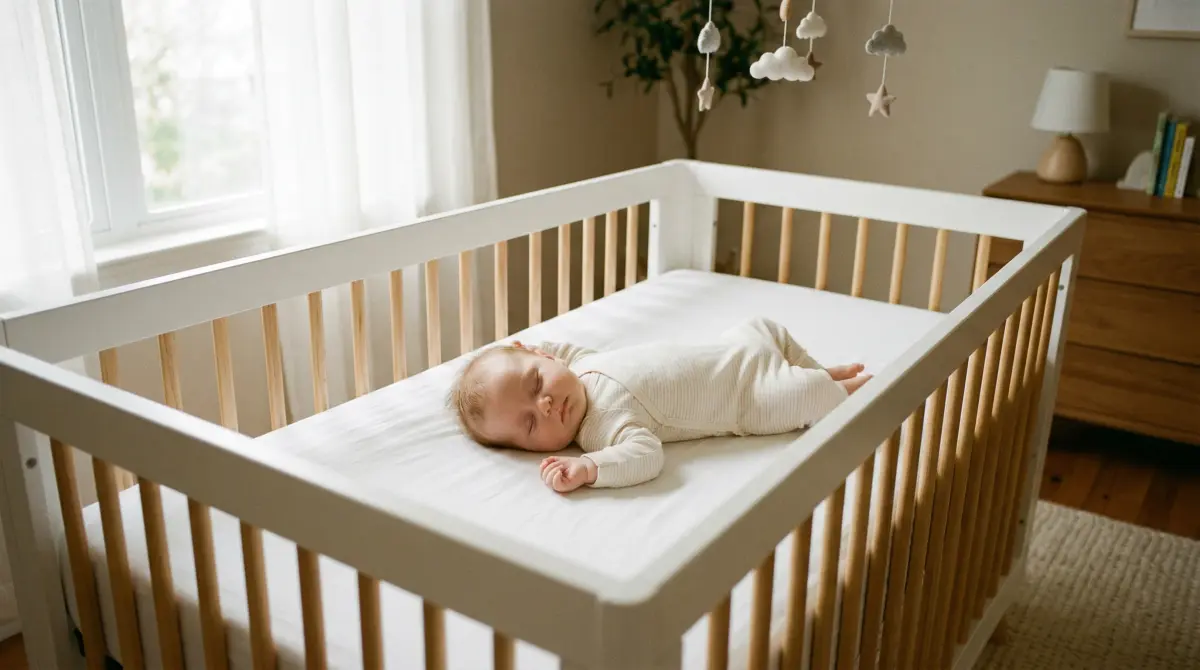
Every year in the United States, approximately 3,500 infants die from sleep-related causes — including sudden infant death syndrome (SIDS), accidental suffocation, and undetermined causes. The good news: the evidence-based safe sleep guidelines from the American Academy of Pediatrics (AAP) are highly effective. Families who follow these guidelines significantly reduce their baby's risk of sleep-related death. This guide draws on the AAP 2022 policy statement and its current parent guidance, alongside NIH Safe to Sleep recommendations. Guideline references checked 26 September 2026.
The ABCs of Safe Sleep
The foundation of safe sleep can be remembered with three letters: ABC — Alone, Back, Crib.
- Alone: Your baby should sleep on their own sleep surface, not with you, not with siblings, not with pets.
- Back: Every sleep, every time — always place your baby on their back.
- Crib (or approved sleep surface): A firm, flat surface with a fitted sheet — nothing else in the sleep space.
SIDS: The Statistics
Sudden Infant Death Syndrome (SIDS) is defined as the sudden, unexplained death of an infant under 1 year of age that remains unexplained after a thorough investigation. SIDS is the leading cause of death in babies between 1 month and 12 months of age, with the peak risk at 2–4 months.
SIDS rates in the US have fallen dramatically since the 1994 "Back to Sleep" campaign — from approximately 1.5 deaths per 1,000 live births to around 0.4 per 1,000. However, sleep-related infant deaths (including accidental suffocation and strangulation) have not declined at the same rate, primarily because of unsafe sleep environments.
| Factor | Safe | Unsafe |
|---|---|---|
| Sleep position | Back, every time | Tummy or side |
| Sleep surface | Firm, flat, noninclined; meets infant sleep-product standards | Soft mattress, inclined sleeper, couch, armchair |
| Bedding | Fitted sheet only | Pillows, blankets, bumpers, positioners, soft toys |
| Sleep location | Separate infant sleep surface in the caregiver’s room for at least 6 months | Adult bed, sofa, car seat (for sleep) |
| Temperature | 68–72°F (20–22°C), light clothing | Overheated, excessive clothing, heavy blankets |
| Swaddling | Until signs of rolling (~2–3 months) | After rolling begins; loose swaddle |
| Pacifier | At sleep times after BF established | Attached to cord or clip |
| Smoke exposure | None — completely smoke-free environment | Any smoke exposure, including outdoors |
Back Sleeping
Back sleeping is the single most important safe sleep action parents can take. It keeps the airway open and reduces the re-breathing of exhaled carbon dioxide. Every caregiver who puts your baby to sleep — grandparents, babysitters, daycare workers — needs to know this rule. It applies to every sleep: naps, nighttime, wherever your baby sleeps.
A common concern: "But what if my baby rolls onto their tummy?" Once your baby can roll from back to front AND front to back independently (typically around 4–6 months), you do not need to reposition them overnight. The risk of SIDS also declines significantly after 6 months. Always start them on their back — what they do after that is out of your control.
Tummy time while awake and supervised is different — and essential for development. Aim for 30+ minutes of supervised tummy time per day, accumulated in short sessions.
Firm, Flat Sleep Surface
Use a firm, flat, noninclined mattress in a crib, bassinet, portable crib or play yard that meets current CPSC safety standards. Use the mattress intended for that product with only a fitted sheet. Do not raise the mattress or add wedges, including for reflux.
Avoid Inclined Sleep Surfaces
Use a level infant sleep surface for every nap and nighttime sleep. Do not use swings, bouncers, inclined sleepers or wedges as a sleeping place. If your baby falls asleep in a sitting device, move them to their usual safe sleep space as soon as possible; when travelling by car, make the transfer once you are out of the vehicle.
Nothing in the Sleep Space
The sleep surface should contain only your baby and a fitted sheet. Remove everything else:
- No pillows — even infant or head-shaping pillows
- No loose blankets — use a sleep sack or wearable blanket instead
- No crib bumpers — padded or mesh. Both pose suffocation and strangulation risks. They are now banned in several US states.
- No positioners, wedges, or anti-roll devices — none of these are approved as safe sleep products
- No soft toys or stuffed animals — until at least 12 months
- No loose cords from monitors or baby devices near the sleep area
Room-Sharing Without Bed-Sharing
AAP and NIH guidance recommends keeping your baby in your room, on a separate infant sleep surface, for at least the first 6 months. This minimum does not mean you must move your baby to another room at 6 months. Keeping the crib or bassinet near your bed also makes nighttime care easier.
Bed-sharing, however, significantly increases the risk of sleep-related death, even on a firm mattress, even with non-smoking parents who have not consumed alcohol or sedating medication. The risk is highest for infants under 4 months, and for any bed-sharing where a parent has consumed alcohol or sedating medications, is a heavy sleeper, or is extremely fatigued.
The AAP acknowledges that some parents will fall asleep with their baby regardless of recommendations, particularly during nighttime breastfeeding. If you are likely to fall asleep while feeding in bed, making the environment as safe as possible (firm mattress, no pillows or blankets near the baby, no other children or pets in the bed) is better than falling asleep on a sofa or armchair with the baby — which carries an even higher risk.
Temperature Regulation
Overheating is an independent risk factor for SIDS. Keep your baby's room at 68–72°F (20–22°C). Dress your baby in one layer more than you would wear comfortably in that room. Signs of overheating include: sweaty neck, flushed cheeks, rapid breathing, and a hot chest. A baby's abdomen (not hands or feet, which are naturally cooler) is the best place to check temperature.
Sleep sacks (wearable blankets) are the safest option for warmth — choose the appropriate TOG rating for your room temperature.
Pacifier Recommendation
The AAP recommends offering a pacifier at nap time and bedtime — this is associated with a significant reduction in SIDS risk. Wait until breastfeeding is established (usually 3–4 weeks) before introducing a pacifier. If your baby rejects it, don't force it. Once your baby is asleep, you don't need to re-insert a fallen-out pacifier.
Swaddling Safety
Swaddling can reduce the startle reflex and help babies sleep more soundly. When done correctly, it is safe for newborns. The rules:
- Hips must be free to move — tight hip swaddling causes developmental dysplasia of the hip
- Stop swaddling as soon as your baby shows any sign of rolling (typically 2–3 months) — a swaddled baby who rolls onto their tummy cannot push themselves up
- Always place a swaddled baby on their back
- Don't overheat — a swaddled baby needs a cooler room
Smoking, Alcohol, and Medication
Prenatal and postnatal tobacco smoke exposure significantly increases SIDS risk. The baby's sleep space should be completely smoke-free — not just during sleep, but at all times. Even second-hand smoke on clothing increases risk.
Bed-sharing risk multiplies dramatically when a parent has consumed alcohol or any sedating substance (including prescription sleep aids, antihistamines, or opioids). If you have consumed alcohol, do not bring your baby to bed with you.
Car Seats Are Not Safe Sleep Devices
Car seats are designed for travel, not sleep. When a baby sleeps in a car seat, their head can fall forward and block their airway. If your baby falls asleep in the car seat, transfer them to a firm, flat surface as soon as you reach your destination. Never leave a sleeping baby unattended in a car seat, swing, bouncer, or inclined device.
What About Special Circumstances?
Premature Babies
Premature infants are at significantly higher risk for SIDS. All the safe sleep guidelines apply — including back sleeping — once the baby is medically stable. In the NICU, premature babies are sometimes placed on their tummies for medical reasons; this does not change the guidelines for home sleep.
Babies with Reflux
Parents of babies with gastroesophageal reflux are sometimes advised (incorrectly) to elevate the head of the crib or use a wedge. Current evidence does not support elevation as a treatment for reflux, and the AAP clearly recommends against any inclined sleeping. Discuss reflux management with your pediatrician using safe, evidence-based approaches.
Frequently Asked Questions
What age is SIDS most common?
SIDS risk peaks between 2 and 4 months and declines significantly after 6 months. Approximately 90% of SIDS deaths occur before 6 months of age. Safe sleep practices are especially critical in the first 6 months, though the AAP recommends maintaining them for the full first year.
Can my baby use a sleep positioner?
No. The FDA has warned against using infant sleep positioners — wedges, rollers, or devices designed to keep a baby in a specific position. There is no evidence they prevent SIDS or reflux, and they pose suffocation risks. The same applies to anti-rollover devices and head-shaping pillows.
When can my baby sleep with a blanket?
Most pediatricians advise waiting until 12 months before introducing a lightweight blanket. Before then, use a sleep sack appropriate for the room temperature. After 12 months, the SIDS risk declines substantially and a small, lightweight blanket is generally considered safe.
Is a bedside bassinet safe?
Approved bedside bassinets and co-sleepers that attach to the side of the adult bed (with the baby on their own firm, flat surface) are safe options that enable easy nighttime feeding while maintaining separate sleep surfaces. Ensure the product meets current CPSC standards and that the baby's sleep surface is truly firm, flat, and level.
My mother says I slept on my tummy and I was fine. Why has the advice changed?
Stomach sleeping was the previous recommendation — it was thought to prevent choking. The evidence clearly showed this was wrong. Back sleeping, now supported by decades of data and associated with a dramatic reduction in SIDS rates, is the current recommendation. Safe sleep guidance continues to evolve as evidence accumulates. Always follow current AAP guidelines, not outdated advice.
References
- Moon, R.Y., & Task Force on Sudden Infant Death Syndrome. (2022). Evidence base for 2022 updated recommendations for a safe infant sleeping environment. Pediatrics, 150(1). https://doi.org/10.1542/peds.2022-057991
- NICHD. Safe to Sleep: Ways to Reduce Baby’s Risk. Accessed 26 September 2026.
- American Academy of Pediatrics. (2022). Sleep-Related Infant Deaths: Updated 2022 Recommendations.
- American Academy of Pediatrics. How to Keep Your Sleeping Baby Safe: AAP Policy Explained. Accessed 26 September 2026.
- U.S. Consumer Product Safety Commission. (2023). Safe Sleep for Babies. https://www.cpsc.gov/SafeSleep
- Hauck, F.R., & Tanabe, K.O. (2008). International trends in sudden infant death syndrome. Pediatrics, 122(3). https://doi.org/10.1542/peds.2007-3749
Emergency: If you find your baby unresponsive, not breathing, or turning blue
Call 911 (US) or your local emergency number immediately. Begin infant CPR if trained. Do not wait — call first.
Your complete baby guide — free
Month-by-month milestones, sleep science, feeding roadmap, and 100+ expert tips. Science-backed, always free.
Open BabyBloom free →No account needed · No credit card